
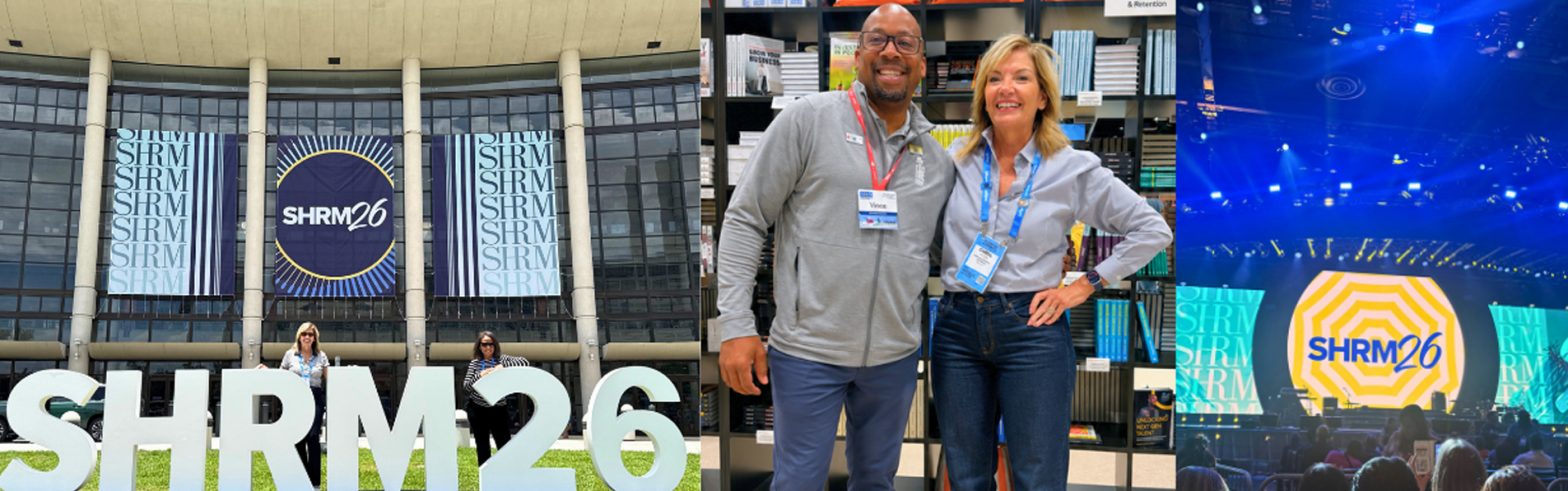
The SHRM Annual Conference brought together more than twenty five thousand HR professionals in Orlando this June, and the conversation on the show floor made one thing clear. AI is no longer a side conversation in HR. It is now its own dedicated track, sitting alongside sessions on workforce planning, frontline retention, and leadership development.
If you did not attend, here is what mattered most and what it means for your organization.
For the first time, SHRM gave artificial intelligence a standalone content track. That is a signal about where HR budgets and attention are headed. But the sessions themselves told a more balanced story.
Across keynotes and breakout rooms, the recurring message was that the organizations pulling ahead are not the ones adopting AI the fastest. They are the ones pairing new tools with real investment in people, leadership, and culture. Speakers repeatedly cautioned HR leaders against treating AI adoption as a replacement for good management rather than a support for it.
For practical purposes, that means training managers on how to use AI responsibly, not just rolling out new software and hoping adoption follows.
Compensation still matters, but it was not the headline issue at this year’s conference. Sessions on frontline retention and the modern employee experience focused heavily on manager quality, transparency, and psychological safety as the levers that actually keep people from walking out the door.
This tracks with what workplace data has shown all year. Employees leave managers, not just jobs, and no AI tool changes that fundamental truth.
The Legal and Compliant HR track covered a growing list of AI regulation questions alongside the usual employment law updates. And the Global Workforce Trends sessions made clear that cross border hiring and international compliance are only getting more complicated as remote and hybrid work remain the norm.
HR teams without a clear point person tracking these changes are exposed. That is simply where the compliance landscape is headed.
You do not need to have attended in person to apply these lessons . Three things are worth doing now.
The organizations that turn these takeaways into action before next year’s conference will be the ones setting the pace, not chasing it.